Idoruru Guided Tour Video
In 1956, Donald Horton and Richard Wohl introduced the concept of parasocial interaction (PSI) in their psychiatric literature Mass Communication and Para-Social Interaction: Observations on Intimacy at a Distance.
Nearly 70 years ago, Horton and Wohl identified the transformative impact of electronic media on interpersonal relationships. Similarly, in the 1960s, Marshall McLuhan (1911–1980), who famously proposed the notion that “the medium is the message,” observed the rapid advancement of technology and foresaw how an ever-expanding media landscape would have a profound effect on human perception and experience.
Can an artist interview be a work of art?
Interview with Yang Jia-Yun
2025, Smartphone, Video presented via streaming, 02'20"
Interview with Chen lu-you
2025, Smartphone, Video presented via streaming, 02'20"
Interview with Lu Wen-ting
2025, Smartphone, Video presented via streaming, 02'20"
In this video series, the three artists presented in the exhibition are in fact performed by other artists. The work adopts the modular language of media interviews—framing the subject, their gestures, working process, spoken narrative, and editorial construction. Displayed alongside each exhibited work, the video appears to introduce the artist and their practice. Yet while the footage remains real, the roles are displaced: artist-actors articulate the exhibited artists’ statements, while simultaneously exposing their own actual processes of making.
Contemporary institutions, through streaming media, construct a public imagination of the artist—establishing a dual structure of how an artist is expected to be seen, and how one learns to become such a figure.
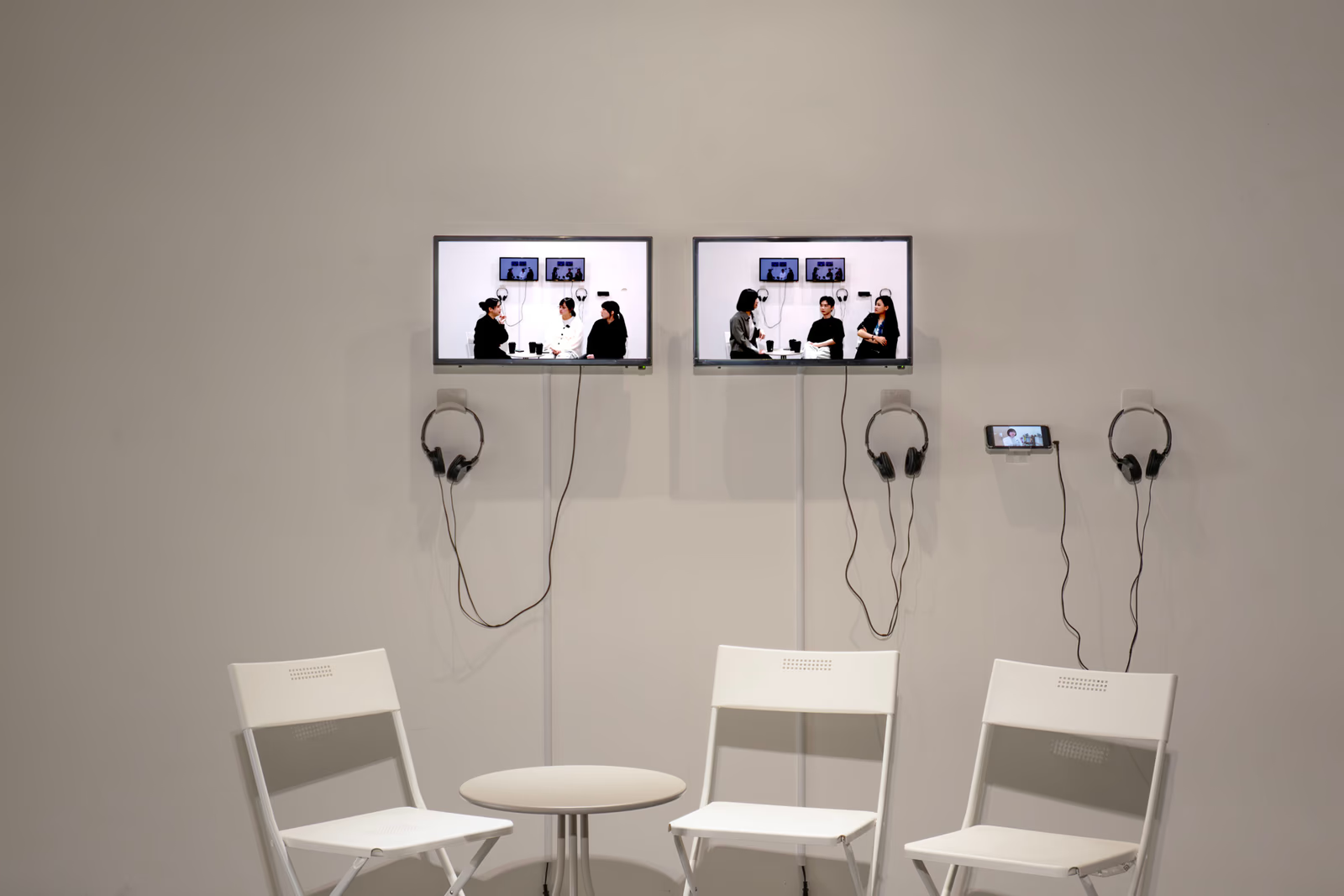
Idoruru Opening Symposium
2025, Artists/Actors communicate in an Opening Symposium, Two-channel video, 10'00"
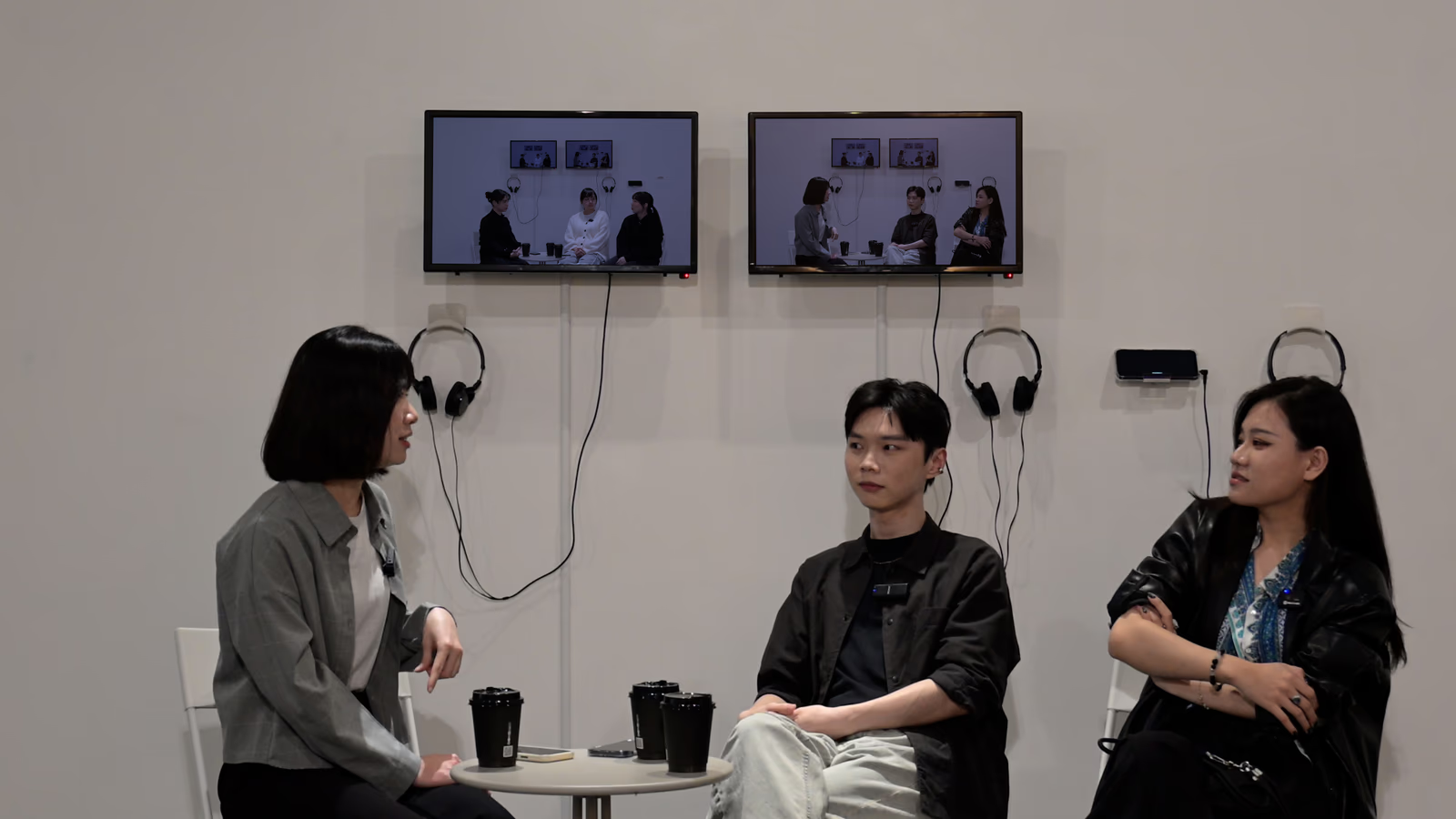
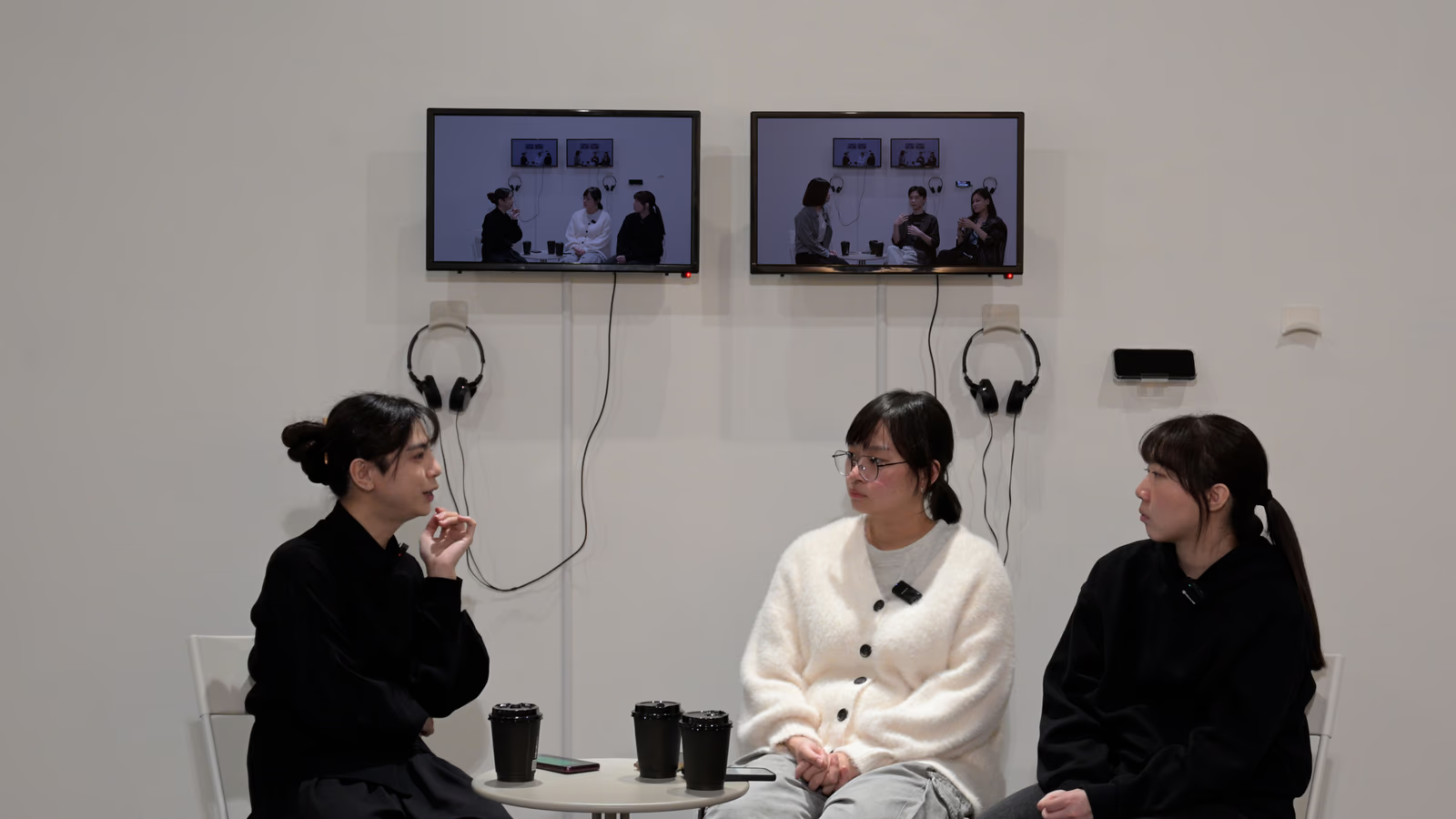
The opening symposium is a common format through which artists publicly present their work, bringing the artist into view while satisfying the audience’s desire to verify the link between artwork and author. This produces a tension between institutional definitions of “good” contemporary art and the presumed authenticity of the artist.
Guided tours further mediate this relation. As docents interpret the work through speech, their narration reshapes its reception, at times displacing the artist’s position.
Within this structure, does the audience begin to project the artist on stage as the figure society expects them to be?
Interview with Yang Jia-Yun, 2025, Smartphone, Video presented via streaming, 02'20"
Interview with Chen lu-you, 2025, Smartphone, Video presented via streaming, 02'20"
Interview with Lu Wen-ting, 2025, Smartphone, Video presented via streaming, 02'20"
Idoruru Opening Symposium, 2025, Artists/Actors communicate in an Opening Symposium, Two-channel video, 10'00"